
There is a lot of news related to China, both domestically and internationally. China has decided to reopen its borders to tourists and resume issuing visas after a three-year hiatus due to the COVID-19 pandemic [6][7]. Additionally, China’s diplomatic response to the AUKUS submarine deal is becoming clearer, with speculation that the country may propose a new anti-AUKUS military alliance soon [8]. Meanwhile, Iran has signed a trade deal with China worth up to $400 billion over 25 years, in exchange for a steady supply of oil [4]. China is also making efforts to boost its economy and tourism industry, with Shandong province planning to allow power prices to turn negative to encourage generators to halt production [9]. Finally, China and North Korea loom large as South Korea and Japan try to make amends and resolve historical disputes [10].
China Reopens to Tourists as COVID-19 Restrictions Ease
After a three-year hiatus due to the COVID-19 pandemic, China has reopened its borders to tourists and will resume issuing all visas starting today, March 15, 2023 [6][7]. The move comes as the country attempts to revive its economy and tourism industry, which has been hit hard by the pandemic.
Starting today, travelers can apply for all types of visas to enter China, including tourist visas, business visas, and student visas. The reopening of borders and resumption of visa issuance is expected to provide a much-needed boost to the tourism industry, which has been severely impacted by the pandemic.
China had closed its borders to foreign travelers in early 2020 as the pandemic began to spread around the world. Since then, the country has implemented strict measures to control the spread of the virus, including mandatory quarantine for all inbound travelers.
However, as vaccination rates increase globally and the number of COVID-19 cases decrease, China has decided to ease restrictions and reopen its borders to foreign travelers.
To ensure the safety of both tourists and locals, China has implemented several measures to prevent the spread of COVID-19. All inbound travelers will be required to show proof of vaccination and a negative COVID-19 test before entering the country. Upon arrival, they will also be subject to a mandatory quarantine period of 14 days, during which they will be monitored for any symptoms of COVID-19.
The reopening of China’s borders is expected to have a positive impact on the country’s economy, which has been struggling in recent years. With the influx of tourists, businesses in the tourism industry are expected to see an increase in revenue and job opportunities.
Tourism is a significant contributor to China’s economy, accounting for nearly 11% of the country’s GDP and providing employment for millions of people. The reopening of borders is expected to provide a much-needed boost to the tourism industry and help support the country’s economic recovery.
In addition to the reopening of borders, China has also announced plans to invest in its tourism infrastructure, including the construction of new airports, hotels, and tourist attractions. These investments are expected to further support the growth of the tourism industry and help make China a top destination for international travelers.
While the reopening of borders is good news for the tourism industry, experts warn that it is important to continue to adhere to COVID-19 safety measures and monitor the situation closely. As the pandemic continues to evolve, it is important for countries to remain vigilant and take the necessary precautions to prevent the spread of the virus.
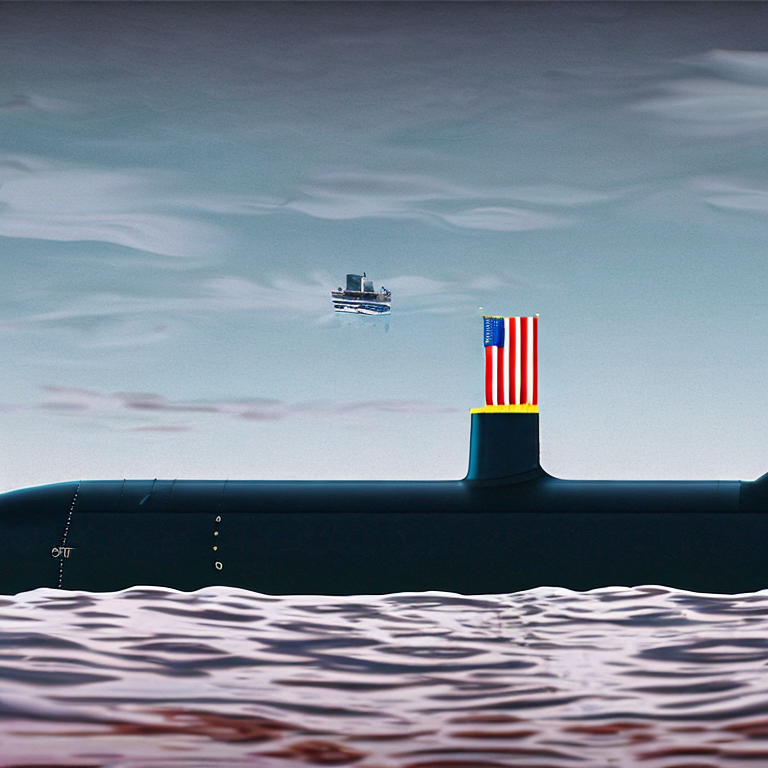
The AUKUS submarine deal, a trilateral security agreement between the US, the UK, and Australia, has raised concerns in China. The deal involves Australia acquiring nuclear-powered submarines, a move that has been perceived by China as an escalation of tensions in the Indo-Pacific region [3].
China’s response to the deal has been clear, with the country’s diplomatic response becoming clearer by the day. Chinese President Xi Jinping is reportedly planning to travel to Russia in the coming weeks to discuss the deal and its implications with Russian President Vladimir Putin. Additionally, China may propose a new anti-AUKUS military alliance soon [8].
The AUKUS submarine deal has sparked concerns about a potential arms race in the Indo-Pacific region. Experts warn that the deal could lead to a dangerous and destabilizing escalation of tensions between the US and its allies on one side, and China on the other. Some experts also argue that the deal could lead to a new arms race in the region, with China responding by increasing its military capabilities and potentially developing its own nuclear-powered submarines [4].
The AUKUS submarine deal is also seen as a setback for China’s ambitions in the Indo-Pacific region. China has been seeking to expand its influence in the region through its Belt and Road Initiative, which involves massive infrastructure investments in countries throughout the region. The AUKUS deal is likely to be seen by China as an attempt by the US and its allies to contain China’s rise and limit its influence in the region [5].
In response to the AUKUS deal, China has called for a regional security dialogue that would include all countries in the region. The Chinese Foreign Ministry has stated that the deal will only lead to further tensions and instability in the region and that a regional security dialogue is needed to address the underlying issues [4].
In 2023, China and Iran signed a trade deal worth up to $400 billion over 25 years, with China investing in Iran’s economy in exchange for a steady supply of oil. The deal has been seen as a major win for Iran, which has been struggling under U.S. sanctions that have severely impacted its economy. The deal has also been seen as a strategic move by China to secure a reliable source of oil and to increase its influence in the Middle East.
The China-Iran oil deal has faced criticism from the United States, which has been working to isolate Iran and cut off its access to international markets. However, China has continued to defend the deal, stating that it is a matter of mutual benefit and that it is not intended to harm the interests of any third party.
The deal has also raised concerns among China’s other oil suppliers, particularly Saudi Arabia, which has traditionally been a key partner of China in the oil sector. Some experts believe that the China-Iran deal could strain China’s relationship with Saudi Arabia and other Gulf countries, which are wary of Iran’s growing influence in the region. Nonetheless, China has continued to strengthen its ties with Iran, which it sees as an important partner in the Middle East.
China’s Shandong province is set to allow power prices to turn negative in order to encourage rooftop solar generation. Negative prices would give generators the ability to halt production when the power supply exceeds demand, promoting the use of solar power as a more sustainable source of energy. This move comes as China continues to ramp up its efforts to reduce its reliance on fossil fuels and meet its carbon reduction targets. The province has a large amount of rooftop solar, making it an ideal location to test this new policy.
As South Korea and Japan try to improve relations and resolve historical disputes, the looming presence of China and North Korea cannot be ignored. Both countries have significant influence and interest in the region, and their involvement could either facilitate or hinder the reconciliation efforts between Seoul and Tokyo.
China, in particular, has been a key player in the ongoing tensions between South Korea and Japan. Its economic and military ties with both countries give it significant leverage and influence over their relationship. As a result, any effort to improve ties between South Korea and Japan would likely require the support and cooperation of China.
Meanwhile, North Korea remains a constant source of tension and uncertainty in the region. Its nuclear program and military capabilities continue to pose a threat to regional stability, and any potential improvement in relations between South Korea and Japan could be met with suspicion or hostility from Pyongyang.
Overall, the delicate balance of power and interests in East Asia means that any attempt at reconciliation between South Korea and Japan must be carefully navigated, taking into account the involvement and concerns of China and North Korea.