
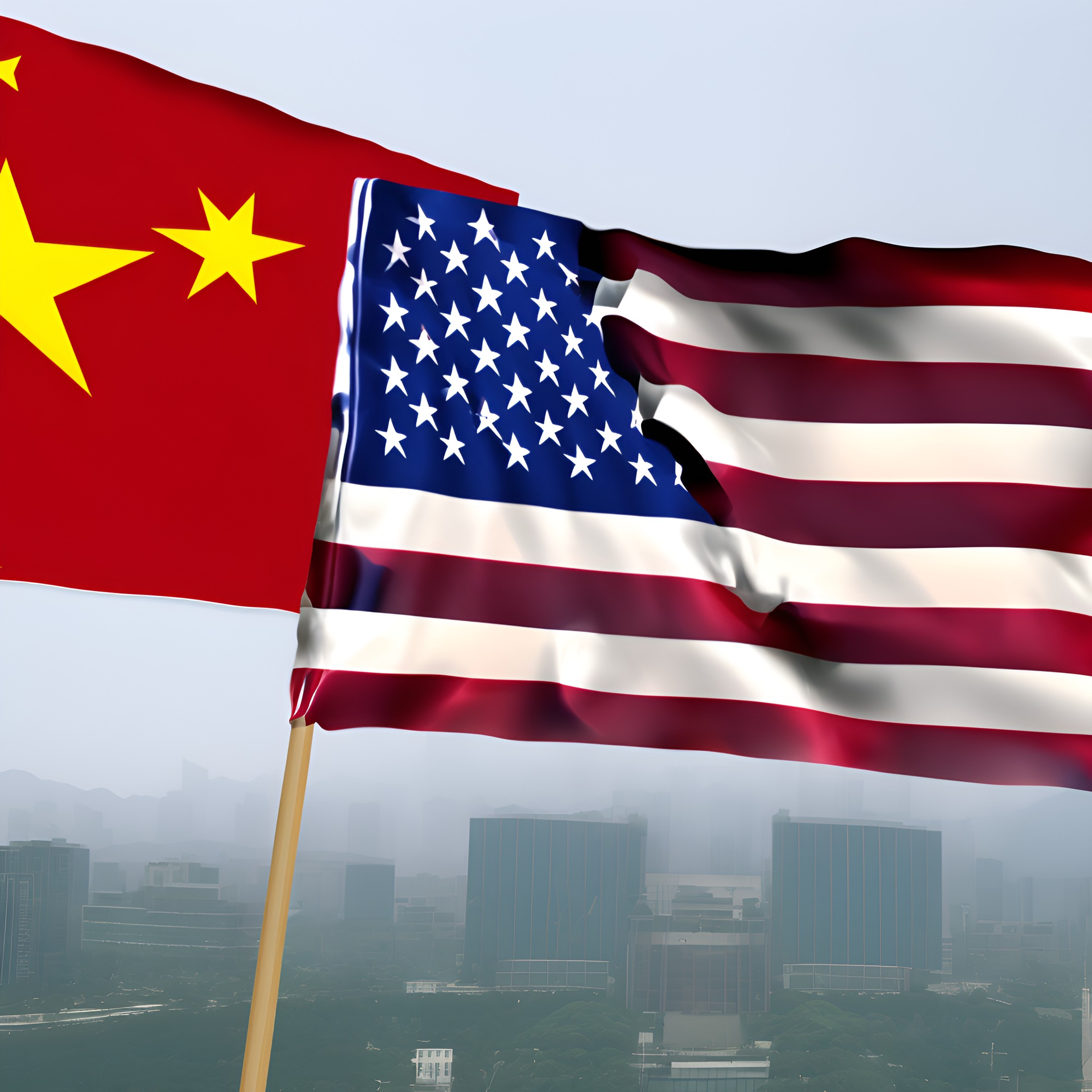
The United States and China are inching closer to armed conflict as the rhetoric between the two countries continues to escalate. With the world’s two largest economies on the brink of a major showdown, the stakes have never been higher. What will happen if the two countries go to war? Who will win? And what will be the consequences for the rest of the world? Read on to find out.
China’s Relationship with the United States
One of the most significant stories involving China in recent weeks has been the country’s relationship with the United States. According to a report from NBC News [1], China is seeking to avoid an escalation of tensions with the United States and is focused on maintaining a stable relationship with Washington. This news comes on the heels of a report from Yahoo News [2] that China was able to penetrate clandestine communications and use that knowledge to arrest and execute at least 20 CIA informants. The fact that China was able to penetrate clandestine communications to carry out these arrests highlights the country’s increasing sophistication in the realm of espionage.
This is a significant development given the recent history of tensions between the two countries. China’s spy chief has stated that the country believes it benefits from a more stable relationship with Washington. This could be an indication that China is looking to improve its relations with the US and avoid further conflicts.
The topic of China’s actions and intentions is likely to be a central focus when top U.S. intelligence leaders testify on global security threats this week, as reported by CBS News [3].
These two news stories demonstrate the complex and sometimes contradictory nature of China’s relationship with the US. While China may desire a more stable relationship with the US, there are still significant challenges to be overcome.
In addition to its relationship with the US, China is also a major player in global affairs. This was highlighted recently when top US intelligence leaders testified on global security threats, with China’s actions and intentions being a central focus [3]. The fact that China is seen as such an important player in global affairs underscores the country’s growing influence in the world.
Economic Developments in China
One area where China’s influence is particularly evident is in the realm of economics. A recent news story reported that China’s inflation rate has slowed to a one-year low, casting doubt on the country’s economic recovery [4]. This is significant because China is the world’s second-largest economy and a key driver of global economic growth. If China’s economy is struggling, this could have implications for the global economy as a whole.
Another news story related to China’s economy is the fact that a coal mine collapse in northern China has left 53 people missing or dead [5]. This tragedy highlights the risks that are inherent in China’s economy, particularly in industries such as mining. It also raises questions about the country’s approach to workplace safety and regulation.
ASML, a Dutch semiconductor company, expects sales in China to remain about flat at $2.3 billion in 2023, implying relative shrinkage as the company expects overall sales to grow by 25%, as reported by VOA News [8].
China’s Crackdown on Expensive Wedding Customs
Another interesting news story coming out of China is the country’s crackdown on an expensive wedding custom as a way to boost its falling birth rate. The custom, known as bride price, requires the groom to pay a sum of money or property to the bride’s family before the wedding. Few people, including officials themselves, expect the measure to make a difference, as reported by NDTV [9].
Beyond economics, China is also a significant player in global politics. A recent news story reported that China has lashed out at the United States, accusing Washington of stoking tensions between the two powers and warning of conflict and confrontation [6]. This is a worrying development, as tensions between the US and China could have significant implications for global security.
China’s Military Capability and Supply Chain Concerns
China’s military capability and concerns over the country using its power in global supply chains as an additional weapon to advance its political and military might have also been in the news recently.
One area where tensions between the US and China could have significant implications is in the realm of military technology. A recent news story reported that China is studying the Ukraine war and is concerned about US missiles and [Starlink satellites]. This highlights the increasing competition between the two countries in the field of advanced weapons systems. The US has long been the dominant military power in the world, but China’s military modernization efforts in recent years have closed the gap, and in some areas, they have surpassed the US.
China’s increasing military might is a concern for the US and its allies in the region. The US has long had a military presence in the Asia-Pacific, but China’s rapid military expansion is changing the regional balance of power. China’s growing military capabilities have raised concerns about its intentions, particularly with regard to Taiwan. China has repeatedly stated that it considers Taiwan to be a part of its territory and has not ruled out the use of force to bring it under its control. This has led to increased tensions between China and the US, which has pledged to defend Taiwan in the event of an attack.
Another area of concern is cybersecurity. The US has accused China of engaging in cyber espionage and theft of intellectual property for years. The US has also accused China of using cyber attacks to interfere in US elections. China has denied these allegations, but the US remains wary of China’s intentions in cyberspace. The US has responded to these concerns by implementing a range of measures to counter Chinese cyber activities, including indictments of Chinese hackers and increased scrutiny of Chinese technology companies.
China’s growing economic power is also a source of concern for the US. China has become the world’s second-largest economy and is projected to surpass the US in the coming years. China’s economic rise has been accompanied by an assertive foreign policy, as seen in its territorial disputes in the South China Sea and its Belt and Road Initiative, which seeks to expand China’s influence around the world through infrastructure development. The US has expressed concern that China’s economic power could be used to challenge the US-led international order and undermine US interests.
In recent years, the US has taken a more confrontational approach towards China, as seen in the trade war initiated by former President Donald Trump. The trade war imposed tariffs on hundreds of billions of dollars worth of Chinese goods and led to a significant downturn in US-China relations. The Biden administration has taken a more nuanced approach, seeking to engage China on areas of mutual interest while also pushing back against Chinese aggression. However, tensions between the two countries remain high, and it is unclear how the relationship will evolve in the coming years.
Overall, the news on China highlights the complex and multifaceted nature of the US-China relationship. While the two countries have significant economic interdependence, they also have significant areas of disagreement and competition, particularly in the areas of military technology, cybersecurity, and regional security. The US-China relationship is likely to remain a major geopolitical challenge for the US and its allies in the region for the foreseeable future.
Subscribe to our newsletter!