
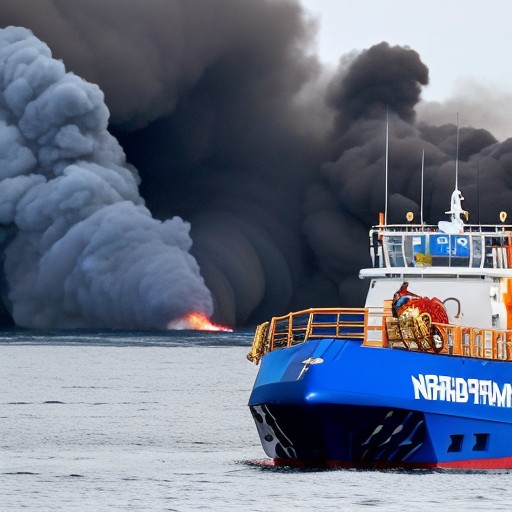
Nord Stream Investigation: What We Know So Far
The Nord Stream gas pipelines have been at the center of controversy since their inception. The pipelines carry natural gas from Russia to Europe, providing a major source of energy for the continent. However, the Nord Stream project has been criticized for its potential to increase Europe’s dependence on Russian energy and for exacerbating tensions between Russia and Ukraine. In recent months, the Nord Stream pipelines have been in the news again, following reports of sabotage and a mysterious gas leak. In this article, we will explore what we know so far about the Nord Stream investigation.
Background
The Nord Stream pipelines consist of two parallel pipelines that run from Russia, under the Baltic Sea, and into Germany. The first pipeline, Nord Stream 1, became operational in 2011, while the second pipeline, Nord Stream 2, was still under construction at the time of the incidents.
The Nord Stream project has been controversial from the beginning, with critics arguing that it would increase Europe’s dependence on Russian energy and give Russia undue influence over the continent. The project has also been criticized for exacerbating tensions between Russia and Ukraine. Ukraine, which had been a major transit country for Russian gas to Europe, has seen its role diminished as a result of the Nord Stream pipelines.
Sabotage and Gas Leak
In September 2022, the Nord Stream pipelines were hit by a series of incidents. On September 26, the Nord Stream 2 pipeline experienced a rapid gas pressure drop, followed shortly after by Nord Stream 1. The incidents caused concern among European energy officials and raised questions about the security of the pipelines.
In the following months, investigators have been trying to determine the cause of the incidents. Initially, there was speculation that the pipelines had been sabotaged. In October 2022, German officials announced that they had identified a boat that they believed was used in the attack. According to a report in Die Zeit [5], the boat was owned by a Ukrainian businessman and had been seen in the vicinity of the pipelines at the time of the incidents. The Ukrainian government denied any involvement in the attack.
In March 2023, new information emerged about the incidents. According to reports, U.S. intelligence officials had concluded that a pro-Ukrainian group was responsible for the sabotage. The group allegedly used a drone to drop explosives on the pipelines. The reports were based on leaks from U.S. officials and have not been confirmed by the U.S. government. The Ukrainian government denied any involvement in the attack and called for an independent investigation [7].
In addition to the sabotage, there was also a mysterious gas leak from the Nord Stream 2 pipeline in September 2022. The leak was detected by a passing ship, which observed bubbles of natural gas rising to the surface of the sea. The cause of the leak is still under investigation. In March 2023, the Russian embassy in the U.S. issued a statement calling for an independent investigation into the incident, which it referred to as an “act of international terrorism against critical energy infrastructure” [9].
Coordinated Reports and Demands for Investigation
In March 2023, the Kremlin issued a statement condemning reports in Western media about the Nord Stream attack as a coordinated effort to divert attention from the actual perpetrators. According to Reuters [1], the statement demanded an open investigation to determine the cause of the incident.
The Nord Stream pipelines, which carry Russian gas to Europe, were damaged in September 2022, prompting months of investigations and finger-pointing [2]. German investigators have since identified the boat they believe was used in the sabotage attack on the pipelines in the Baltic Sea, according to a report in Die Zeit [5].
However, recent reports have suggested that the initial accusations against Ukraine may have been false. Germany’s Foreign Minister has even suggested that the attack may have been a “false flag” operation, designed to smear Ukraine [3]. Meanwhile, new U.S. intelligence indicates that a pro-Ukrainian group may have been responsible for the attack [7].
These conflicting reports have led to demands for an independent investigation to determine the true cause of the incident. The Russian embassy in the United States has criticized leaks about the terrorist attack, saying they were designed to hide the truth and undermine the investigation [9].
The Kremlin has also demanded an open investigation into the incident and criticized what it called coordinated efforts by Western media to divert attention away from the true perpetrators [1]. The Nord Stream 1 shareholders include Russia’s state energy firm Gazprom, Germany’s Wintershall DEA AG and E.ON, Dutch company NV Nederlandse Gasunie, and France’s Engie [8].
Despite the demands for an independent investigation, it remains unclear who was responsible for the Nord Stream attack. Some reports suggest that a pro-Ukrainian group may have been involved, while others indicate that the attack may have been a false flag operation aimed at discrediting Ukraine. The investigation is ongoing, and it is likely to take some time before a definitive conclusion is reached.
In conclusion, the Nord Stream attack in September 2022 remains a mystery, with conflicting reports and accusations. While some have suggested that a pro-Ukrainian group may have been responsible, others have criticized the accusations as part of a coordinated effort to divert attention from the true perpetrators. The ongoing investigation will hopefully shed more light on the incident and help to prevent similar attacks